Appendix B: Tiles
Flowers
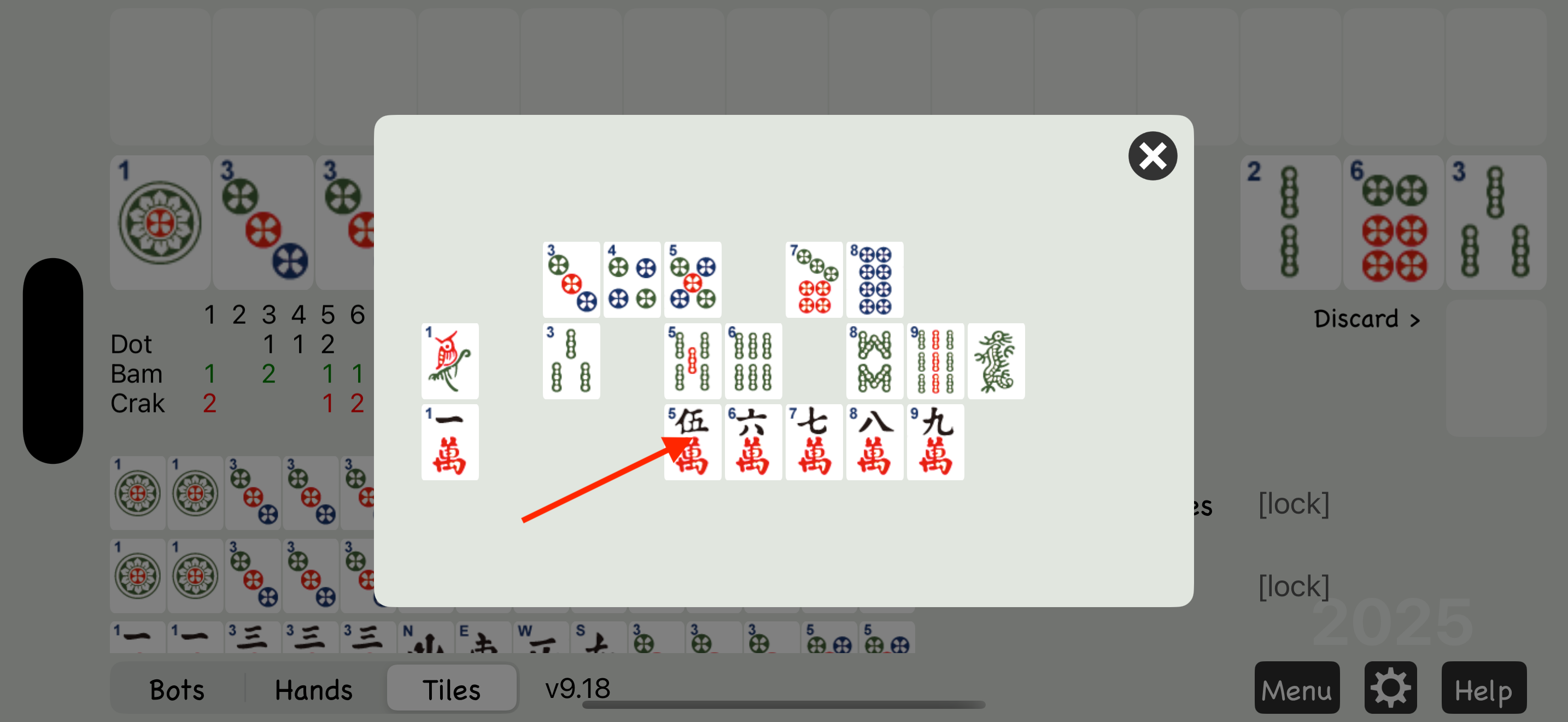
Section titled “Flowers”These are the 8 flower tiles used in the American Mahjong App. All flower tiles are interchangeable. It’s important to learn how to recognize them — especially since the One Bam tile can look similar to some flower tiles.


Bams & Green Dragon
Section titled “Bams & Green Dragon”Bam (bamboo) tiles are one of the three suits. The One Bam is usually shown as a bird on a bamboo stalk — ours looks like an owl. The Green Dragon is used in hands where the dragon tile must match the Bam suit.


Dots & Soap (White Dragon)
Section titled “Dots & Soap (White Dragon)”Dot tiles are another of the three suits in American Mahjong. The Soap tile, also known as White Dragon, is a special tile that appears with the Dots. In year hands, the Soap tile is used to represent the number zero. It’s the only tile that can be used as a 0, and it still counts as a dragon for hands that require dragons.


Craks & Red Dragon
Section titled “Craks & Red Dragon”Craks (short for Characters) are the third suit in American Mahjong, alongside Bams and Dots. They are represented by red Chinese characters. The Red Dragon is associated with the Craks suit and is used in hands that require matching dragons. When a hand calls for dragons to match Craks, you’ll use the Red Dragon tile.


Most hands on the official Mahjong card require specific Wind tiles. Some may focus on just one or two Winds, such as East and West.
In Quints hands, the card may list North as a placeholder to mean any Wind can be used. The hand description will explain this flexibility — be sure to read it carefully.
Jokers cannot be used in Wind pairs or the Wind singles (NEWS) hand.
Use the Hands and Tiles views to see how Winds fit into your current hand and decide which ones to keep or pass.


Jokers
Section titled “Jokers”Jokers are wild tiles in American Mahjong and can be used to complete most tile combinations — but there are important restrictions.
Where Jokers can be used:
- Pungs (three of a kind)
- Kongs (four of a kind)
- Quints (five of a kind)
Where Jokers cannot be used:
- Pairs (two of a kind)
- Year hands (e.g., 2025), since those use single, non-matching tiles
- The NEWS combination, when a hand requires a single North, East, West, and South
- Any combination that uses single tiles — not just in Singles and Pairs hands, but anywhere on the card that calls for individual tiles
Additional Notes:
- Jokers cannot be called or passed during the Charleston
- The app will warn you if you try to use a Joker in an invalid place
- The position of Jokers matters — try to bookend them (e.g., 1J1) to make your intent clear

Blank Tiles
Section titled “Blank Tiles”Blank tiles are not officially part of traditional American Mahjong or sanctioned National Mah Jongg League (NMJL) play, but they’ve started appearing in some informal home games, teaching apps, and experimental playgroups.
There are two common ways blank tiles are used in live games:
- Discarded tiles option (used by this app): Exchange a blank tile for any previously discarded tile at any time during play. This exchange does not need to be announced — players often use blanks strategically and quietly to recover needed tiles without revealing their hand.
- Super joker option (not used by this app): Use the blank tile as a wildcard that can represent any tile, similar to a joker but more powerful since it can be used in pairs and singles where regular jokers cannot.
In Mahjong Practice when you get a blank tile, it will appear as a plain white tile in your hand.
To use a blank tile:
- Enable Blank Tiles in Settings.
- Drag the blank tile over the Discard Table.
- A view will pop up to pick a tile from the discarded tiles.
- Tap the tile you want to take.
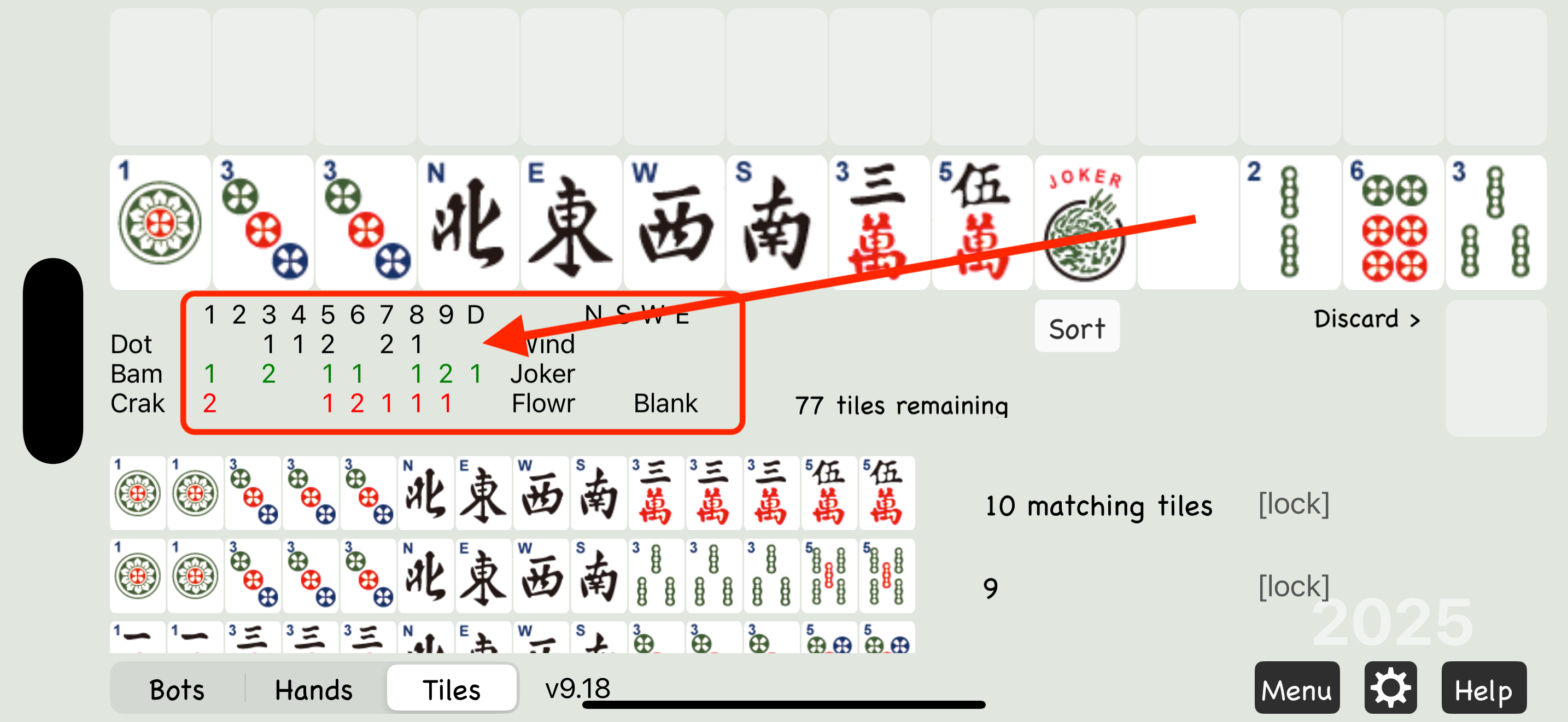
In this example, we have a blank tile that can be used to pick up the discarded 5 Crak at any time to complete our pair.